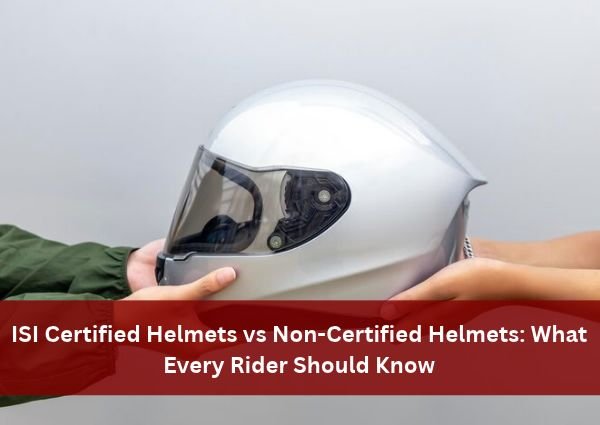
Choosing the right motorcycle helmet is essential for every rider, whether travelling short distances within the city or covering long distances on highways. A helmet is designed to help protect the head during an accident, but not all helmets are manufactured or tested to the same standards. One of the most important differences buyers should understand is the distinction between ISI-certified and non-certified helmets.
In India, the ISI mark indicates that a product has been certified against applicable Bureau of Indian Standards (BIS) requirements. For motorcycle riders, understanding helmet certification can help them make informed purchasing decisions and avoid products that may not meet the required safety standards.
Before purchasing a helmet, it is important to understand what certification means, how certified and non-certified helmets differ, and what features should be checked.
1. What Are ISI Certified and Non-Certified Helmets?
ISI-certified helmets are helmets that have been assessed and certified according to the applicable Indian Standard. The certification process involves meeting specified requirements related to helmet construction and performance.
Non-certified helmets are products that do not have verified certification against the applicable Indian standard. They may be available in different designs, colours, and price ranges, but their appearance alone cannot establish whether they provide an appropriate level of protection.
Understanding the ISI Mark on Motorcycle Helmets
The ISI mark is an important indicator of conformity with relevant Indian product standards. When purchasing a motorcycle helmet, buyers should check that the mark and associated certification details are genuine and applicable to the specific product.
Some important points to consider include:
- Applicable BIS Standard: Check whether the helmet complies with the relevant Indian Standard for protective helmets.
- Genuine ISI Mark: Look for a properly displayed and verifiable certification mark.
- Manufacturer Details: Check the manufacturer’s name and product identification information.
- Certification Validity: Verify the relevant licence or certification details where possible.
- Product Quality: Examine the shell, inner liner, padding, strap, and fastening system.
Buyers should avoid relying on stickers or printed marks alone. Certification claims should be verified through appropriate BIS information and documentation.
Why Certification Matters
Helmet certification provides a recognised basis for assessing whether a helmet meets specified safety requirements. It helps buyers distinguish products that have undergone the required conformity assessment from those without verified compliance.
A helmet’s colour, graphics, brand appearance, or low price cannot replace proper safety certification.
2. Key Differences Between ISI Certified and Non-Certified Helmets
The main difference between certified and non-certified helmets is the availability of verified evidence that the product meets the applicable safety requirements.
Here are some important factors riders should understand:
Safety Testing and Compliance
ISI-certified helmets are required to meet the applicable BIS standard and certification requirements. Non-certified helmets do not provide the same verified assurance of compliance.
This distinction is important because helmet safety depends on factors such as impact management, retention-system performance, construction, and other design requirements.
Manufacturing Quality and Consistency
A certified product must meet the relevant requirements under the applicable certification system. However, buyers should still inspect the individual helmet for visible damage, manufacturing defects, and correct assembly.
For non-certified products, there may be less reliable evidence that the helmet has been assessed against the relevant Indian standard.
Legal Compliance in India
Riders should ensure that the helmets they purchase and use comply with applicable Indian rules and standards. The ISI mark is particularly important when selecting a motorcycle helmet for use on Indian roads.
A decorative or fashion helmet without the required certification should not be treated as an equivalent substitute for a compliant protective motorcycle helmet.
Price and Overall Value
Non-certified helmets may sometimes be offered at lower prices. However, choosing a helmet only because it is inexpensive can be a poor decision if its safety compliance cannot be verified.
An ISI-certified helmet is a more informed choice because its certification provides evidence of conformity with the applicable Indian requirements. Riders should consider safety, fit, construction, and durability rather than comparing products on price alone.
3. How to Choose the Right Certified Motorcycle Helmet
Selecting an ISI-certified helmet is an important first step, but riders should also consider its fit, construction, and suitability for their riding needs.
Keep these points in mind before making a purchase:
- Check the Certification: Verify the ISI mark and relevant BIS certification details for the exact helmet model.
- Choose the Correct Size: The helmet should fit snugly without causing painful pressure or excessive movement.
- Inspect the Outer Shell: Look for cracks, dents, or other visible signs of damage.
- Check the Chin Strap: Ensure the retention system fastens securely and works correctly.
- Evaluate the Inner Padding: Comfortable padding should support a stable fit and should not be excessively worn.
- Select a Suitable Design: Full-face, open-face, and other helmet styles offer different levels of coverage. Choose according to your riding requirements and applicable safety standards.
- Purchase from Reliable Sellers: Buy from authorised dealers or trusted manufacturers to reduce the risk of counterfeit or misleading certification claims.
A helmet should also be replaced after a significant impact, even if there is no obvious external damage. Follow the manufacturer’s guidance regarding inspection, care, and replacement.
The difference between ISI-certified and non-certified helmets is an important consideration for every motorcycle rider. While non-certified helmets may look attractive or cost less, they do not provide the same verified assurance of compliance with applicable Indian safety standards.
An ISI-certified helmet, when genuine, correctly fitted, and maintained properly, is a more responsible choice for everyday riding. Always check certification details, inspect the helmet’s construction, and select a size that fits securely.
Virgo Helmet offers motorcycle helmet options for riders who value design, comfort, and safety-focused construction. Explore the range of motorcycle helmet products to learn more about available designs and find a helmet suited to your riding requirements.